
2006–2026 · EuroMed
EuroMed 20 Years of Digital Cultural Heritage Knowledge
For two decades, EuroMed has provided an international forum where researchers, cultural heritage professionals, museums and memory institutions, technology experts, industry, educators and policymakers come together to exchange knowledge and shape the future of Digital Cultural Heritage.
Twenty Years of Education, Innovation, Networking and Policy
One of the best ways to experience this extraordinary evolution is through the EuroMed publications (books and proceedings), published at the beginning by ARCHAEOLINGUA in Hungary and as of 2010 by Springer in Germany. Across twenty years, they have been downloaded more than four (4) Million times and provide a unique scientific record and testimony of how Digital Cultural Heritage has developed worldwide: from digital documentation, 3D reconstruction and visualisation, to laser scanning and photogrammetry, GIS, BIM and HBIM, HHBIM digital preservation, VR/AR and immersive technologies, semantic technologies and knowledge graphs, Artificial Intelligence and Machine Learning, Digital Twins, cultural heritage data spaces and increasingly intelligent digital ecosystems.
With millions of downloads, the EuroMed publication series has become an important international reference and a remarkable chronicle of the transformation of our field.
Continuing the European and Worldwide Dialogue
EuroMed2026 also continues the momentum of the highly successful Digital Heritage Summit, organised in Cyprus during the Cyprus Presidency of the Council of the European Union. The Summit brought together the international community to address digital transformation, AI, 3D and immersive technologies, Europeana, the European Cultural Heritage Data Space, Digital Twins and the future of Cultural Heritage in Europe.
EuroMed2026, taking place 100% online, now extends this dialogue across geographical and disciplinary boundaries. Registration is required, and there is no in-person attendance in Limassol.
EuroMed is twenty years of knowledge, innovation and collaboration. It is our bridge to the 21st century revolution in digital technology and a bridge between generations, enabling the next generation of researchers, professionals and innovators to build upon the knowledge, achievements and pioneering results of leading researchers from around the world in the area of Digital Heritage. By learning from the experience of the past, challenging today’s boundaries and embracing tomorrow’s technologies, they can help shape a more intelligent, inclusive, sustainable and human-centred future for Cultural Heritage.
Proceedings
Twenty years of published volumes
Each cover links to the corresponding proceedings volume or published record.
 2025Open(opens in a new tab)
 2024Open(opens in a new tab)
 2024Open(opens in a new tab)
 2024Open(opens in a new tab)
 2023Open(opens in a new tab)
 2021Open(opens in a new tab)
 2020Open(opens in a new tab)
 2019Open(opens in a new tab)
 2018Open(opens in a new tab)
 2018Open(opens in a new tab)
 2017Open(opens in a new tab)
 2016Open(opens in a new tab)
 2016Open(opens in a new tab)
 2015Open(opens in a new tab)
 2014Open(opens in a new tab)
 2014Open(opens in a new tab)
 2012Open(opens in a new tab)
 2012Open(opens in a new tab)
 2010Open(opens in a new tab)
 2010Open(opens in a new tab)
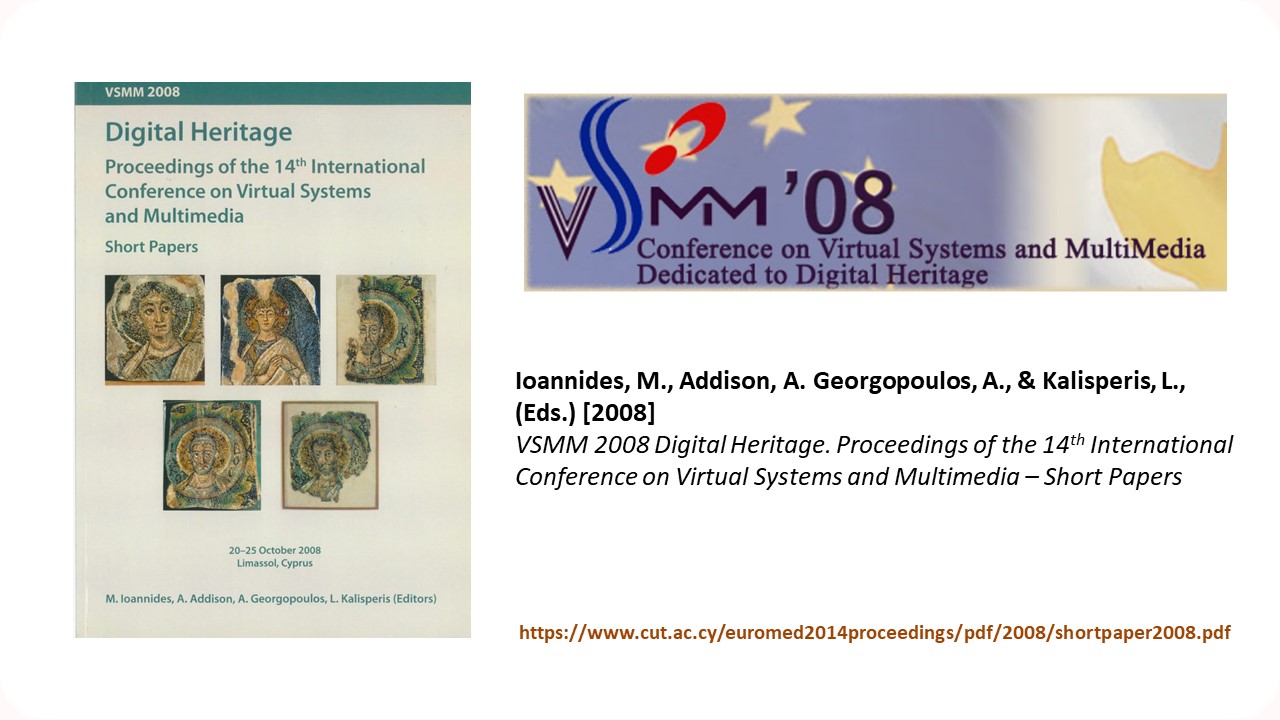 2008Open(opens in a new tab)
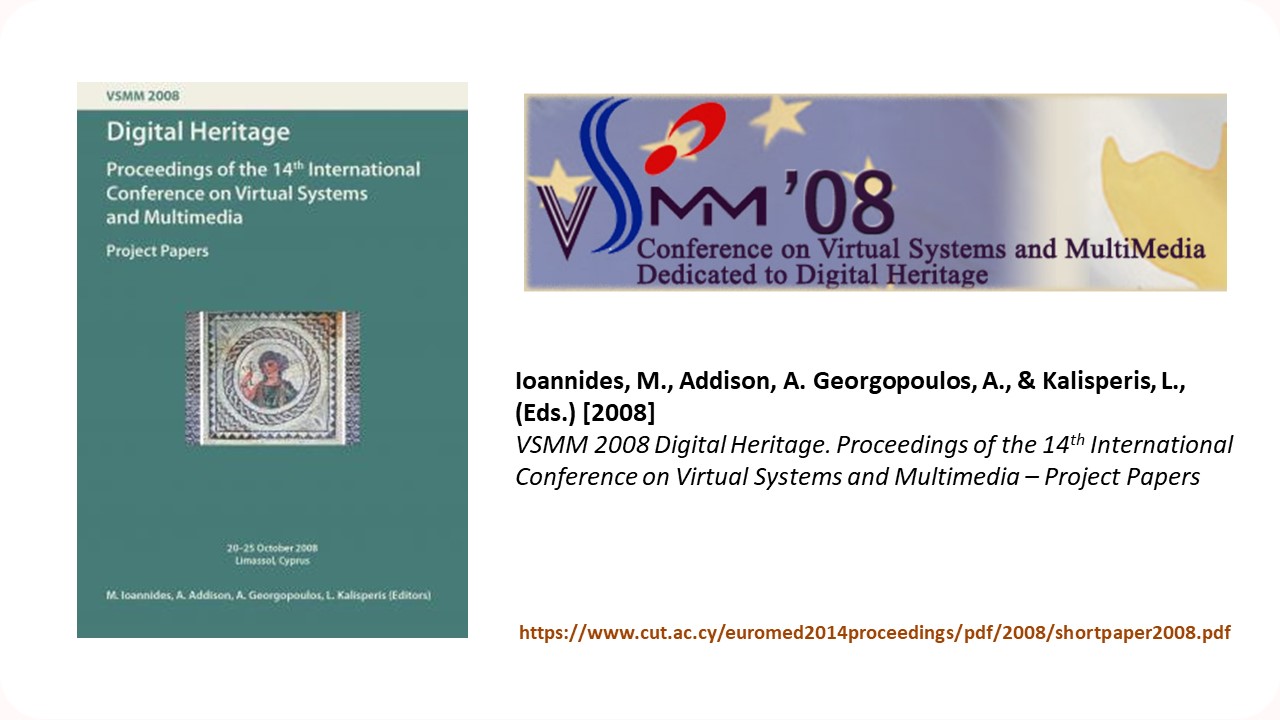 2008Open(opens in a new tab)
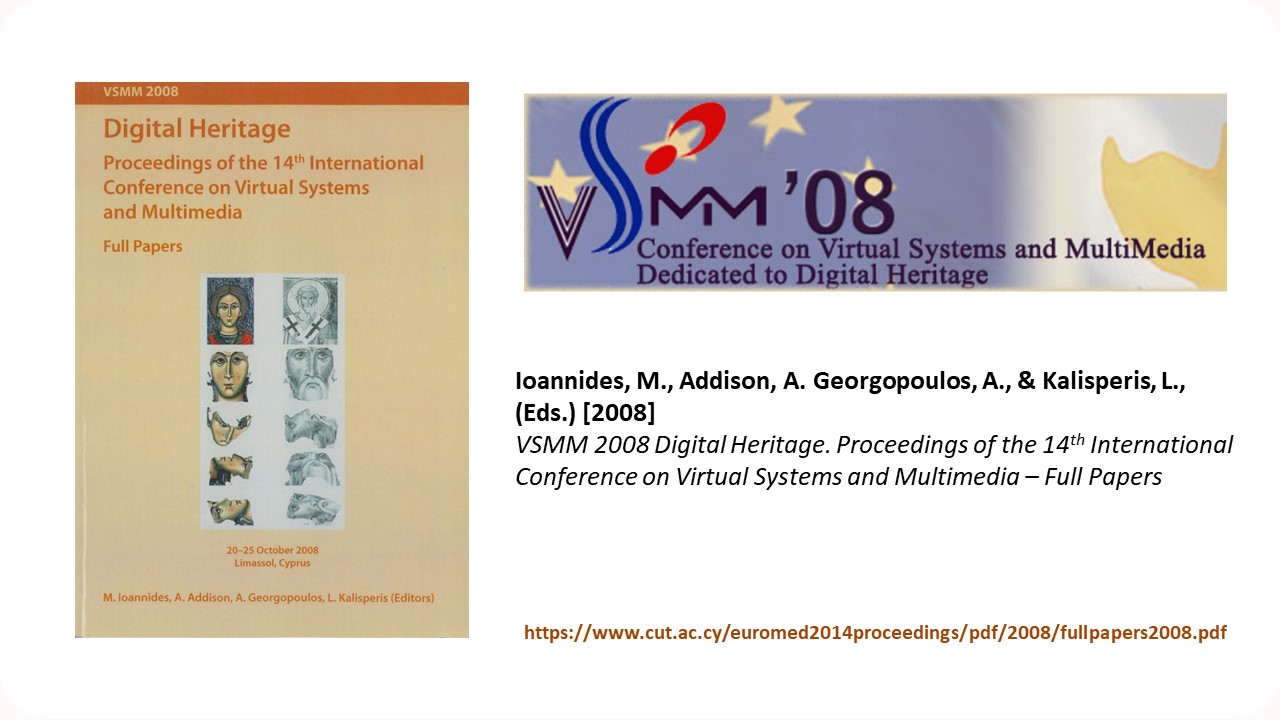 2008Open(opens in a new tab)
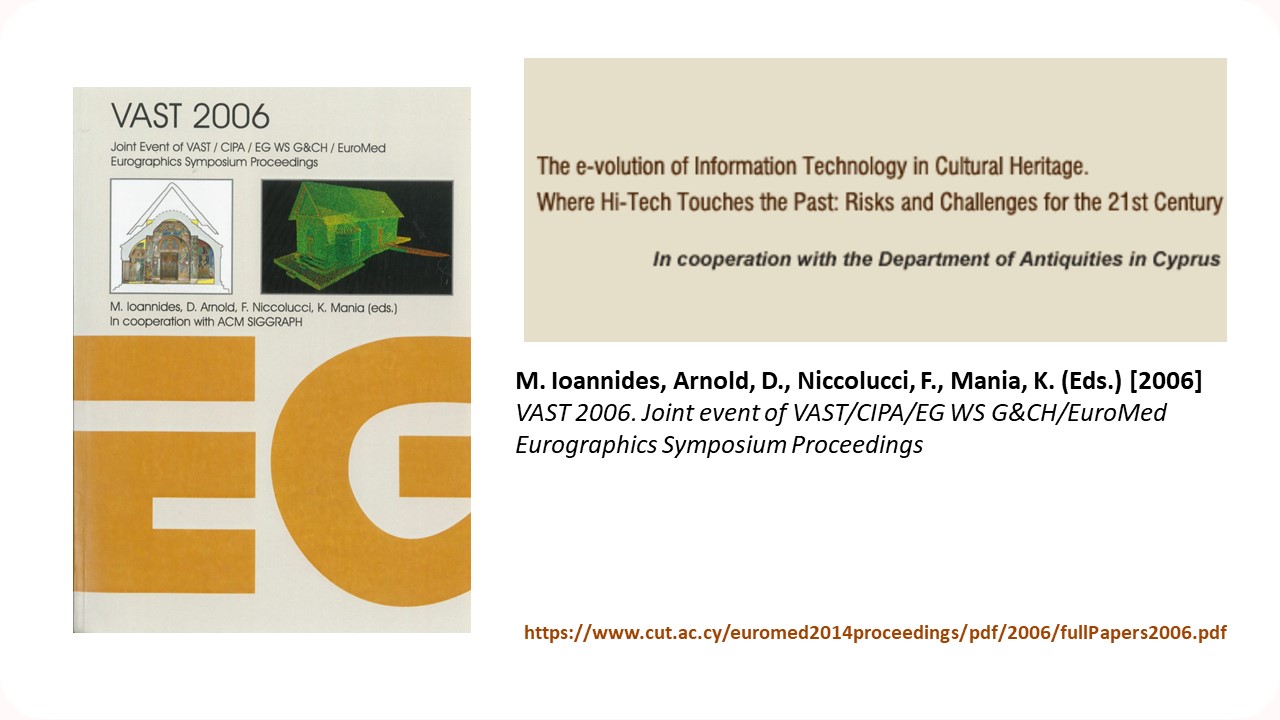 2006Open(opens in a new tab)
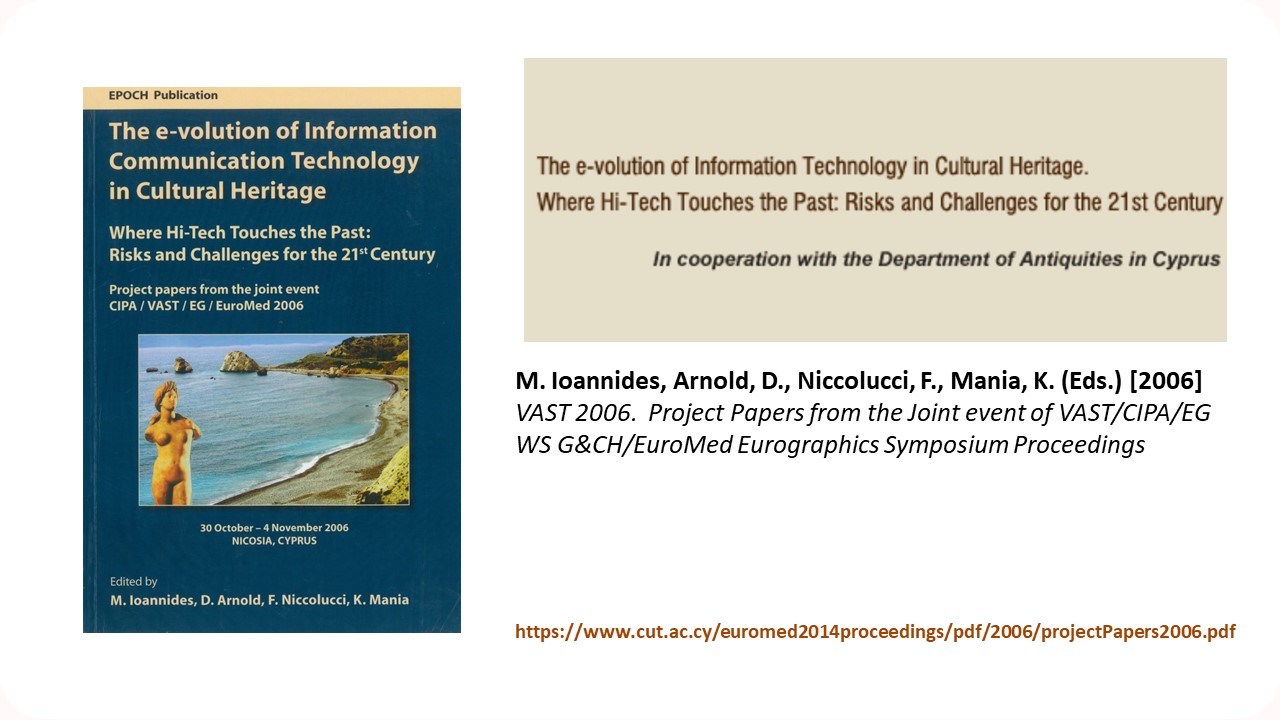 2006Open(opens in a new tab)
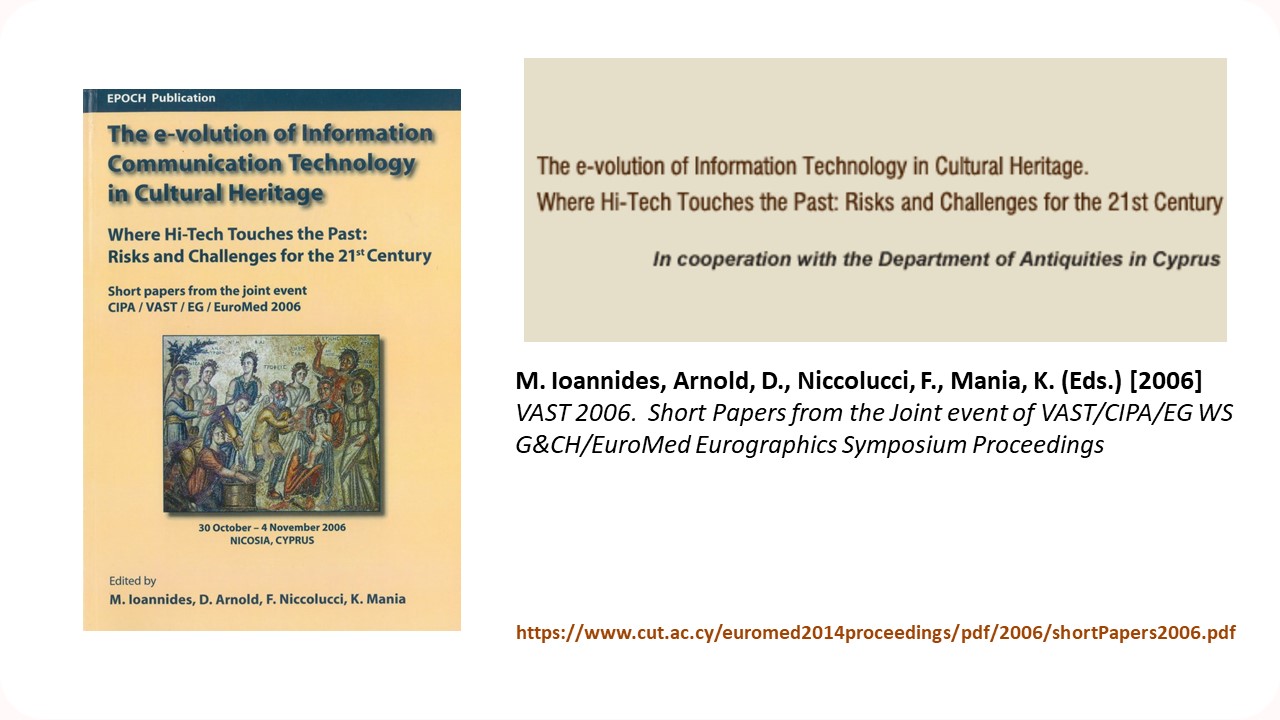 2006Open(opens in a new tab)
Editions
Every EuroMed conference, 2006 to 2026
EuroMed 2026: Digital Heritage Summit (a EuroMed special edition) convened international experts in Limassol, Cyprus, from 25 to 29 May 2026, focusing on the transition from structural digital twins to semantic “Memory Twins” for cultural heritage preservation. Organised by the UNESCO Chair at the Cyprus University of Technology and Heritage Malta, the event established new standards for the authentic documentation of historical memory under the auspices of the Cypriot Presidency of the Council of the European Union.
The summit, featuring collaborations with organisations like the Horizon Europe ECHOES project, proposed a new European competence centre to combat the illicit trafficking of artefacts. Through technical sessions, the Hackit!4EU Hackathon, by Europeans, and policy discussions, the event advanced data interoperability and shaped future research agendas for global cultural asset management.
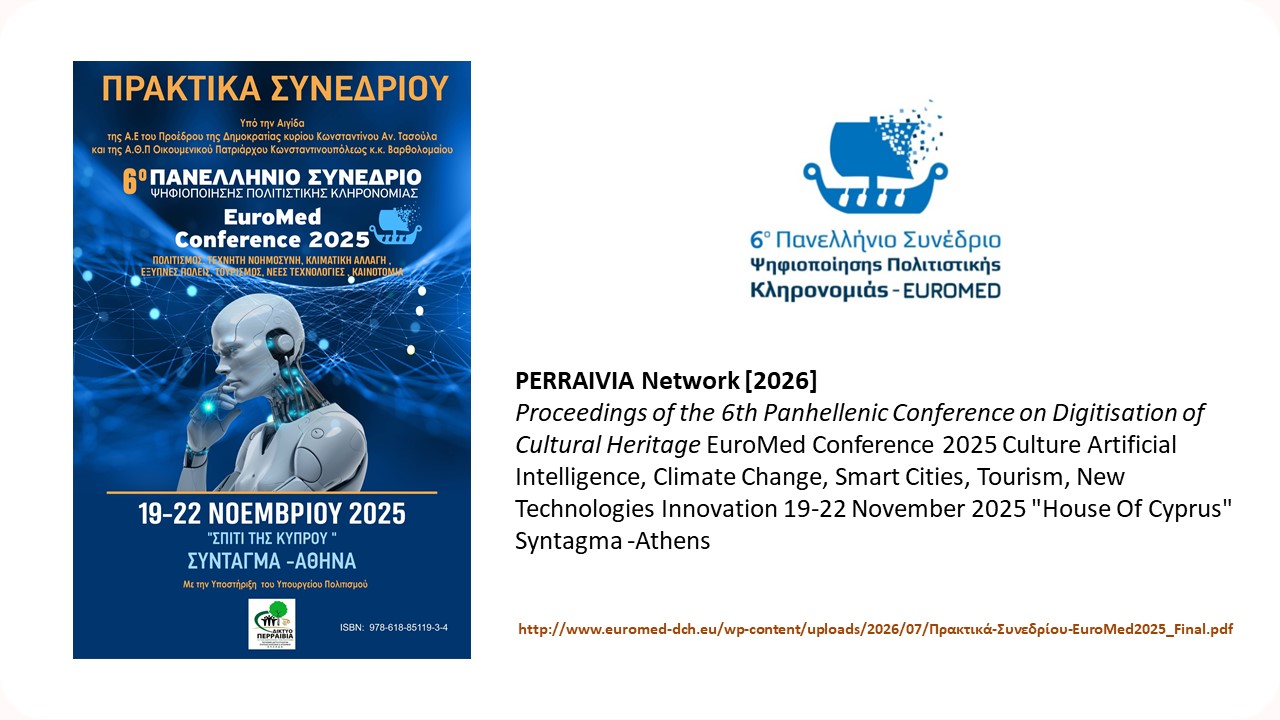
EuroMed 2025
6th Pan-Hellenic Conference on the Preservation of Cultural Heritage
Conference website(opens in a new tab)EuroMed 2025 successfully convened an extensive assembly of scientists, academic institutions, and state representatives from Greece and Cyprus. Held from 19 to 22 November 2025, the institutionalised biennial forum evaluated innovative technical methodologies designed to archive, preserve, and showcase Hellenic cultural assets. Attendees participated in peer-reviewed panels that leveraged the technical expertise of the Cyprus University of Technology to map out sustainable heritage management systems. By linking advanced computer engineering with regional public bodies, the conference successfully formalised cross-border workflows for local museum and archive digitisation.
Concurrently, the international flagship network directed its global research presence toward the 4th Digital Heritage World Congress & Expo held in Siena, Italy. This massive four-day summit brought together major transnational consortia—including Europeana, DARIAH, and the EUreka3D-XR infrastructure—to address 3D data capture and cloud interoperability. Researchers reviewed highly competitive open-access studies regarding extended reality (XR) applications and automated artefact classification. The event effectively established unified technological criteria across the European data space, bridging global scientific assets to protect vulnerable historical records against environmental threats.
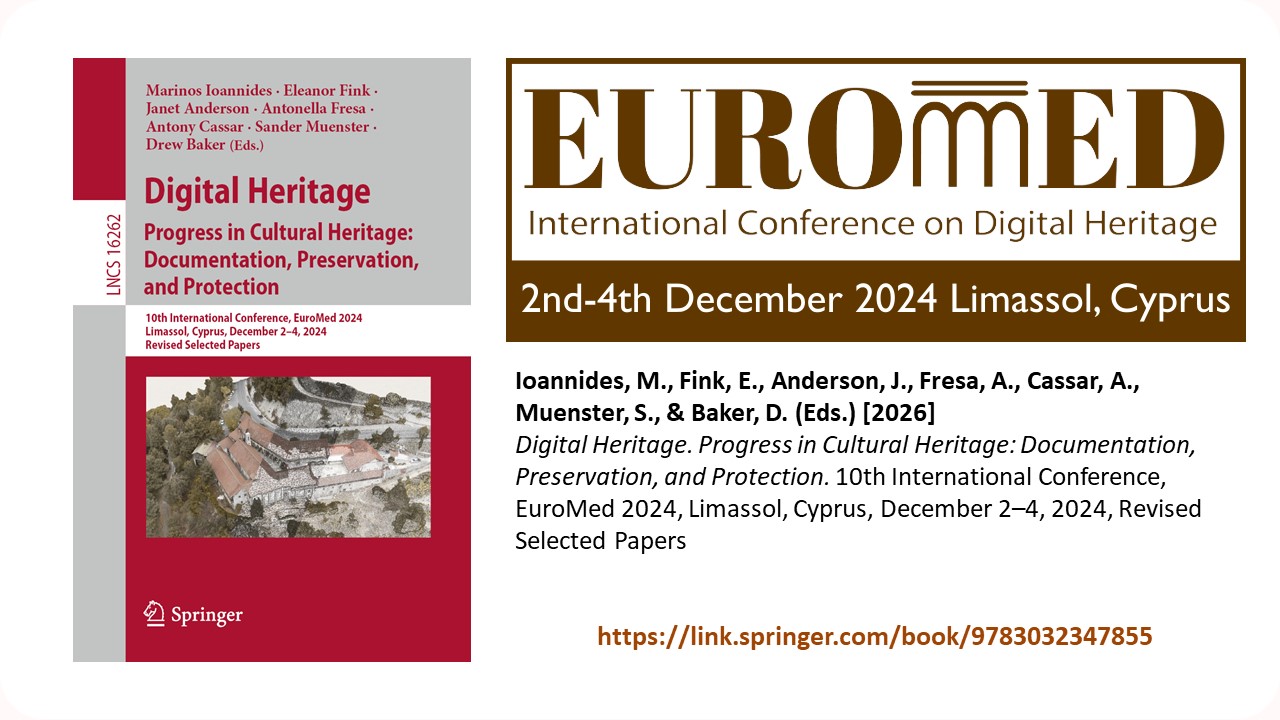
EuroMed 2024 successfully took place from 2 to 4 December 2024 at the Cyprus University of Technology (CUT) in Limassol, Cyprus. Celebrating its milestone second decade, the flagship biennial event convened a global assembly of researchers, policymakers, and heritage practitioners from multidisciplinary domains. Organised under the leadership of the UNESCO Chair on Digital Cultural Heritage at CUT, the conference focused on the deployment of cutting-edge technologies for the mass digitisation, protection, documentation, and long-term conservation of global cultural assets.
The technical agenda addressed the rapid growth of the cross-sector “Cultural Heritage Knowledge Economy,” emphasising market-ready innovations for small-to-medium enterprises and sustainable approach strategies for heritage managers. Attendees engaged in numerous high-profile workshops, featuring targeted sessions on the EUreka3D project, the Horizon Europe HERITALISE project, and the EU eArchiving Initiative.
Publications
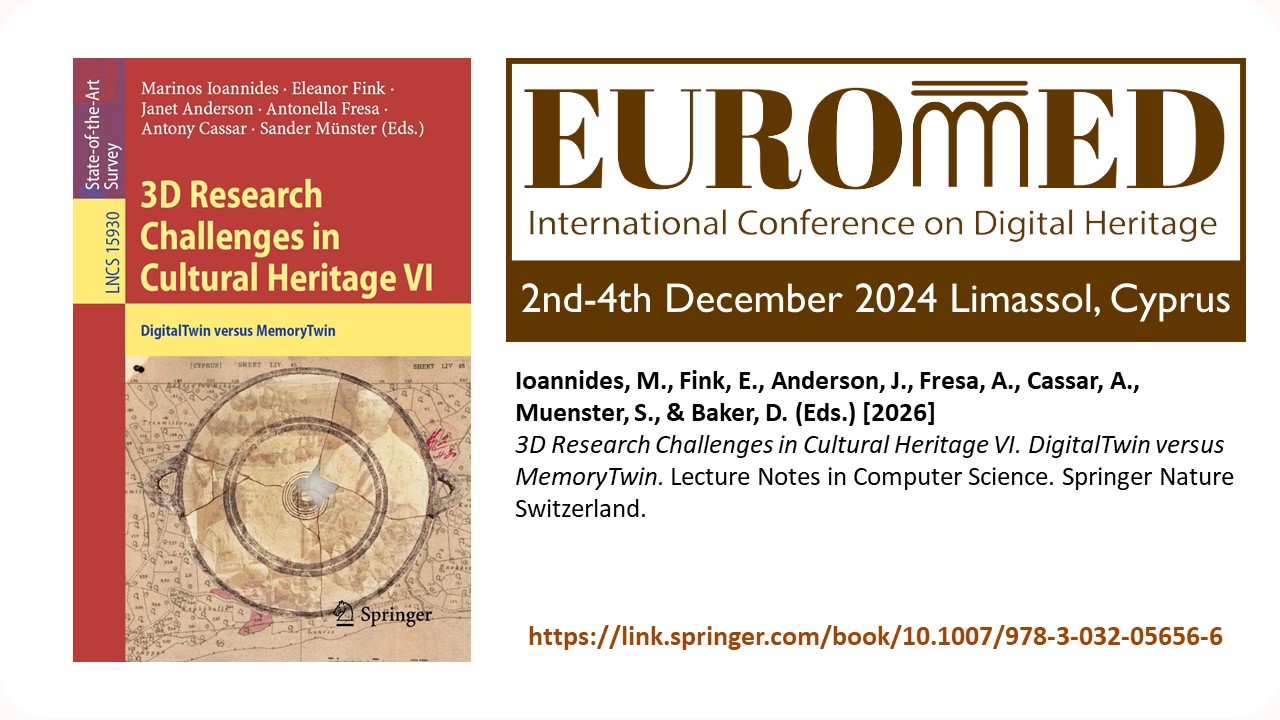
- M. Ioannides, E. Fink, J. Anderson, A. Fresa, A. Cassar, & S. Münster (Eds), 3D Research Challenges in Cultural Heritage VI: DigitalTwin versus MemoryTwin. Lecture Notes in Computer Science. Springer Nature Switzerland. Available from https://doi.org/10.1007/978-3-032-05656-6
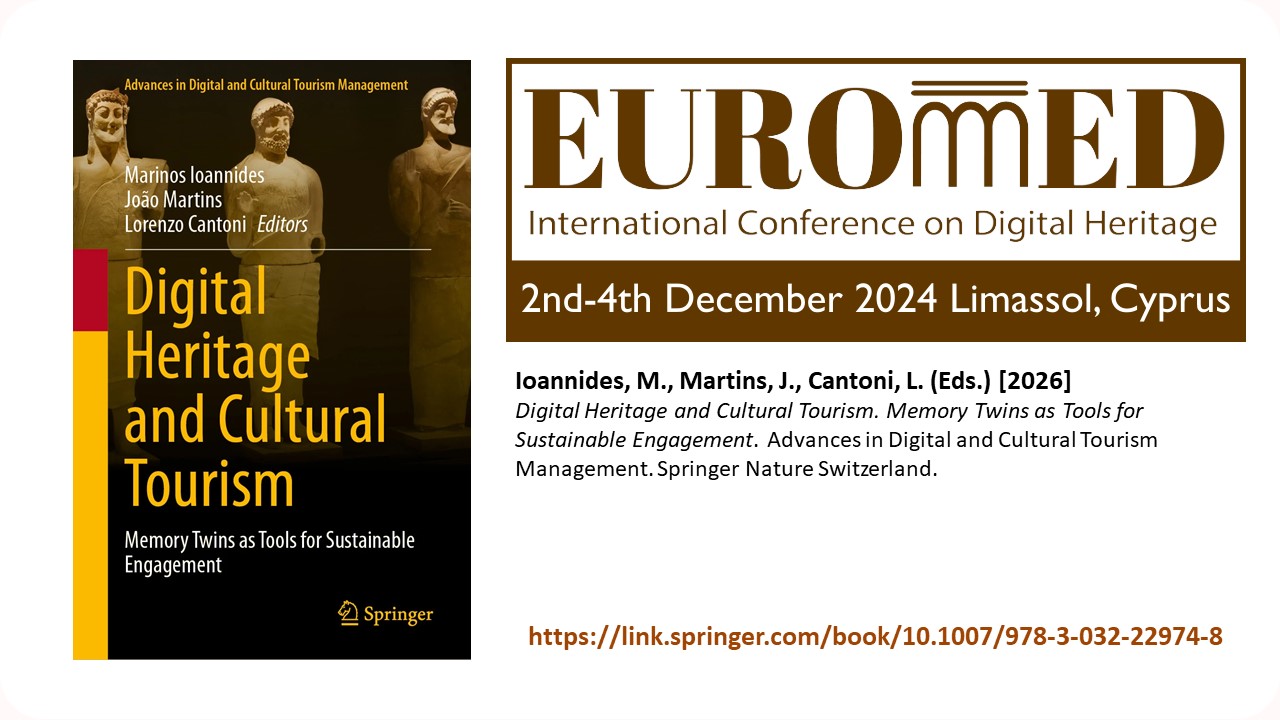
- M. Ioannides, J. Martins, & L. Cantoni (Eds), Digital Heritage and Cultural Tourism: Advances in Digital and Cultural Tourism Management. Springer Nature Switzerland. Available from https://doi.org/10.1007/978-3-032-22974-8
EuroMed 2023
5th Pan-Hellenic Conference on the Preservation of Cultural Heritage
Conference website(opens in a new tab)EuroMed 2023 brought together experts in Larissa, Greece, to standardise digital documentation frameworks and advance 3D scanning, digitisation, and VR technologies. The conference, supported by academic and national entities, fostered cross-border collaboration between the humanities and computer science to secure cultural heritage.
Discussions focused on integrating climate resilience, smart-city technology, and tourism to protect historical structures. The event concluded by establishing updated criteria for unified, cloud-based metadata repositories to preserve Hellenic assets.
EuroMed 2022 convened in Cyprus, bringing together global experts to focus on standardising the e-documentation, conservation, and digital visualisation of cultural assets. The hybrid event highlighted advancements in machine learning, 3D scanning, and legal frameworks for heritage protection, including case studies like the digitisation of the UK Palace of Westminster.
The conference featured workshops on initiatives such as INCULTUM and Citizen Heritage. Ultimately, the event aimed to advance international standards for preserving tangible and intangible heritage against modern environmental and geopolitical challenges.
EuroMed 2021
4th Pan-Hellenic Conference on the Preservation of Cultural Heritage
Conference website(opens in a new tab)EuroMed 2021 successfully convened from 30 September to 3 October 2021. Because the international flagship series scheduled its major iterations for even years, the 2021 timeline focused on this highly competitive national web conference. The online event was co-organised by the Cyprus University of Technology (CUT), the University of West Attica, and the Greek non-governmental organisation Perrevia Network to advance preservation frameworks across Greece and Cyprus. Operating under the high patronage of both the President of the Hellenic Republic and the Ecumenical Patriarch of Constantinople, the digital summit evaluated technical solutions linking culture, education, innovation, tourism, and climate change.
Presentations highlighted advanced 3D metadata indexing, digital narration tools for historical monuments, and regional data-sharing initiatives. Prominent research, such as the COSMOS project, received distinguished scientific awards for originality and documentation, cementing the 2021 conference as a critical milestone for Hellenic digital heritage.
EuroMed 2020 successfully transitioned into a fully virtual event from 2 to 5 November 2020 due to global pandemic restrictions. Originally planned to take place in Cyprus, the four-day online assembly brought together international scholars, engineers, and policymakers to address the changing dynamics of historical preservation. Attendees actively participated in technical workshops that examined the legal and ethical responsibilities of cultural informatics, 3D metadata standards, and strategies to prevent the looting and demolition of vulnerable world heritage sites.
The academic footprint of the virtual summit was highly significant, generating a comprehensive collection of peer-reviewed data. Key technical papers focused on leveraging cutting-edge information and communications technology (ICT) solutions for cloud archiving, machine learning in archaeology, and massive asset digitisation. Additionally, interactive panels featured data-sharing studies from the Europeana Common Culture project, showcasing how crowd-sourced community engagement can effectively boost data quality and long-term public preservation frameworks.
Publication
- M. Ioannides, E. Fink, L. Cantoni, & E. Champion (Eds), Digital Heritage. Progress in Cultural Heritage: Documentation, Preservation, and Protection 8th International Conference, EuroMed 2020, Virtual Event, November 2–5, 2020, Revised Selected Papers. Lecture Notes in Computer Science. Springer International Publishing. Available from https://doi.org/10.1007/978-3-030-73043-7
EuroMed 2019
3rd Pan-Hellenic Conference on the Preservation of Cultural Heritage
Conference website(opens in a new tab)EuroMed 2019 was held from 25 to 27 September 2019 at the University of West Attica in Athens, Greece, focusing on advanced methods for digital preservation and archaeological documentation. Organised in partnership with the Cyprus University of Technology and the Perrevia Network, the event brought together regional experts to advance data processing and sustainable cultural tourism.
Discussions highlighted the standardisation of cultural assets, featuring the National Documentation Centre’s SearchCulture.gr as a tool for connecting local records to Europeana. The conference fostered collaboration on cloud-based archiving and 3D museum exhibits, establishing key frameworks for regional digital heritage initiatives.
EuroMed 2018
7th International Conference on Digital Heritage
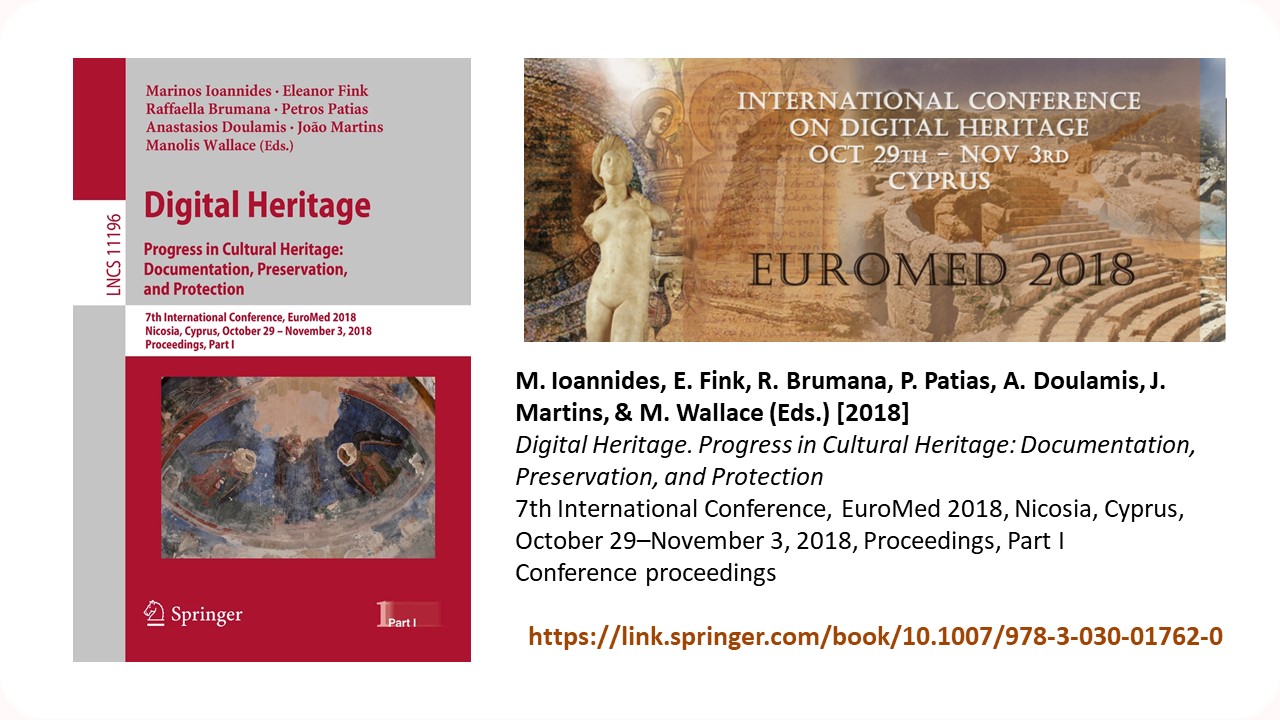
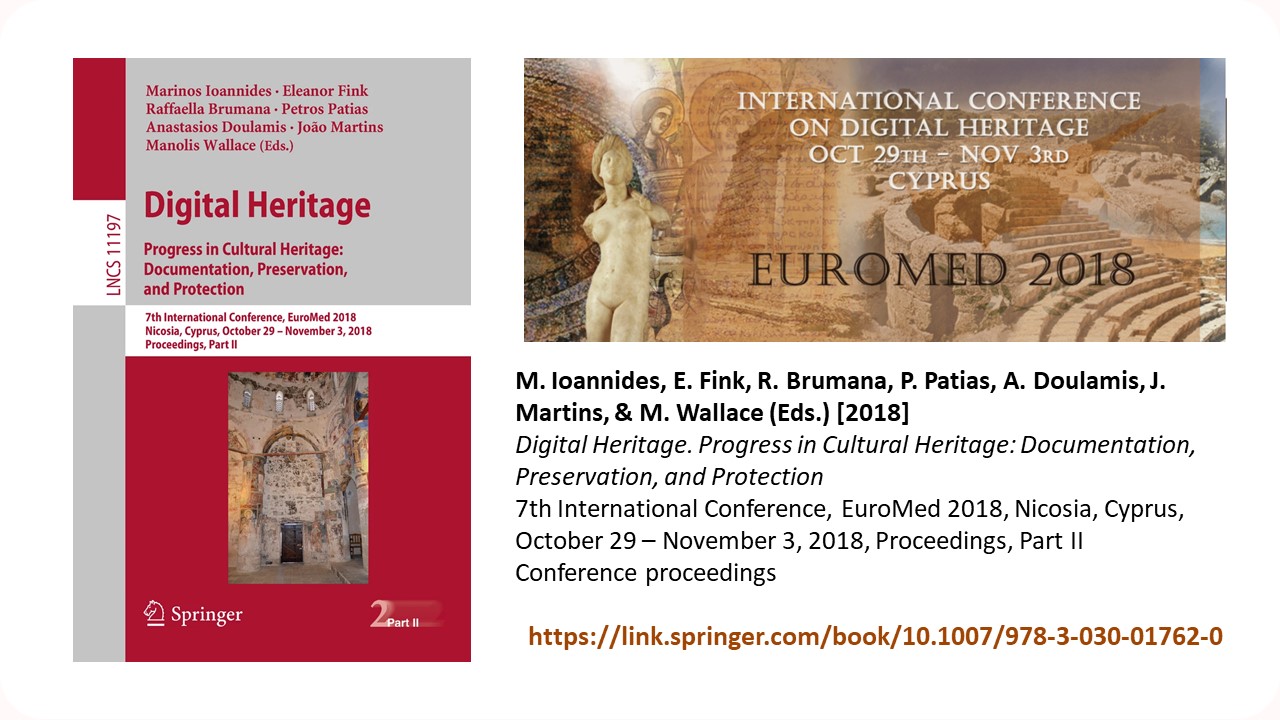
EuroMed 2018 saw international experts gather in Nicosia, Cyprus, to address the intersection of technology and cultural preservation. The six-day event focused on Heritage Building Information Modelling (HBIM), non-destructive testing, and immersive virtual reality, promoting global cooperation to safeguard endangered historical sites.
Of specific note, a workshop was held to finalise the EU Roadmap for Digital Cultural Heritage and Virtual Museums, focusing on practical data-sharing frameworks. The conference featured a rigorous selection process; out of 537 global submissions, the program committee accepted a final cohort of 21 full research papers, 47 project papers, and 29 short papers.
Publications
- M. Ioannides, E. Fink, R. Brumana, P. Patias, A. Doulamis, J. Martins, & M. Wallace (Eds), Digital Heritage. Progress in Cultural Heritage: Documentation, Preservation, and Protection 7th International Conference, EuroMed 2018, Nicosia, Cyprus, October 29–November 3, 2018, Proceedings, Part I. Lecture Notes in Computer Science. Springer International Publishing. Available from https://doi.org/10.1007/978-3-030-01762-0
- M. Ioannides, E. Fink, R. Brumana, P. Patias, A. Doulamis, J. Martins, & M. Wallace (Eds), Digital Heritage. Progress in Cultural Heritage: Documentation, Preservation, and Protection 7th International Conference, EuroMed 2018, Nicosia, Cyprus, October 29–November 3, 2018, Proceedings, Part II. Lecture Notes in Computer Science. Springer International Publishing. Available from https://doi.org/10.1007/978-3-030-01765-1
EuroMed 2017
2nd Pan-Hellenic Conference on the Preservation of Cultural Heritage
Conference website(opens in a new tab)EuroMed 2017 was held from 1 to 3 December 2017 in the coastal city of Volos, Greece. Jointly organised by the Cyprus University of Technology (CUT), the University of Thessaly, the Piraeus University of Applied Sciences, and the Perrevia Network, the national event was held at the waterfront Papastratos Complex. Under the high patronage of both the President of the Hellenic Republic and the Ecumenical Patriarch of Constantinople, the gathering functioned as an essential multidisciplinary platform where scientists, policymakers, and engineers established cohesive frameworks for recording and preserving Greek cultural assets.
The presentation and discussion panels focused heavily on the practical integration of advanced technology within the humanities, archaeological research, and sustainable tourism. Researchers reviewed updated methods in high-resolution 3D artefact digitisation, intellectual property frameworks for public archives, and interactive multimedia deployment for modern museum education. By combining state support from the Greek Ministry of Digital Policy, Telecommunications and Information with international expertise from the global EuroMed network, the conference successfully formalised cross-border digital cultural links and broadcast its scientific findings live to an international audience.
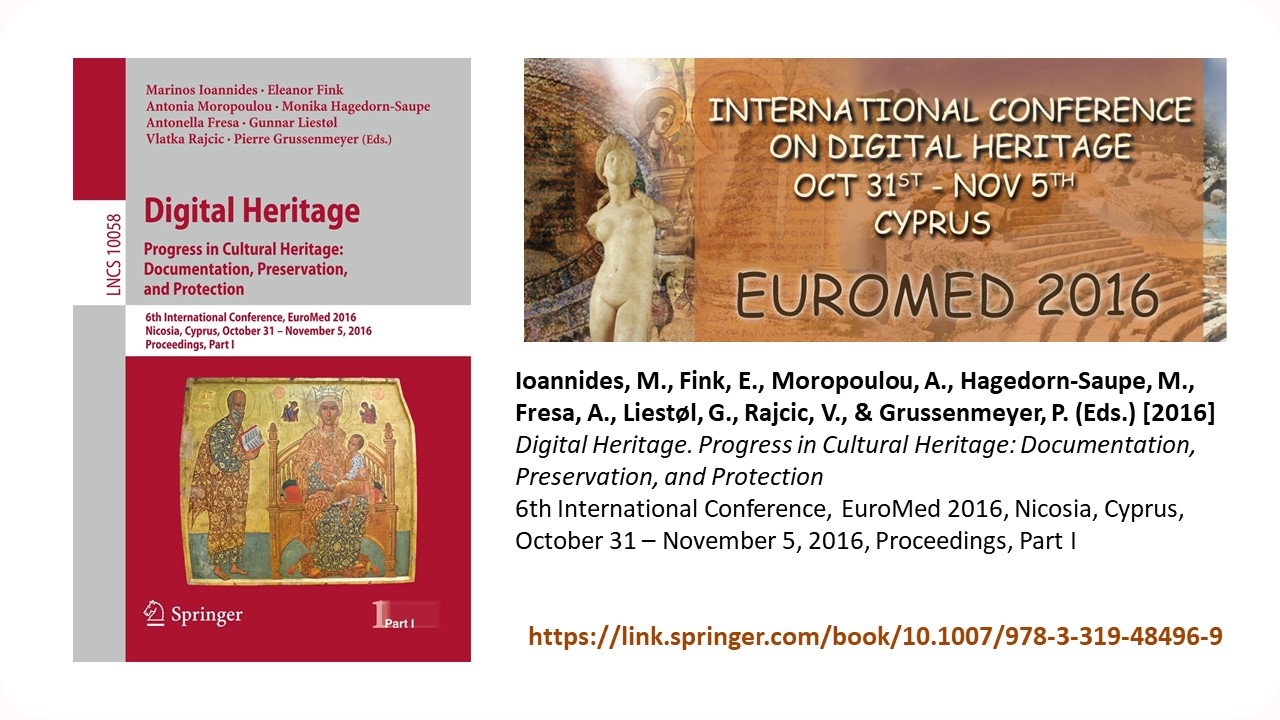
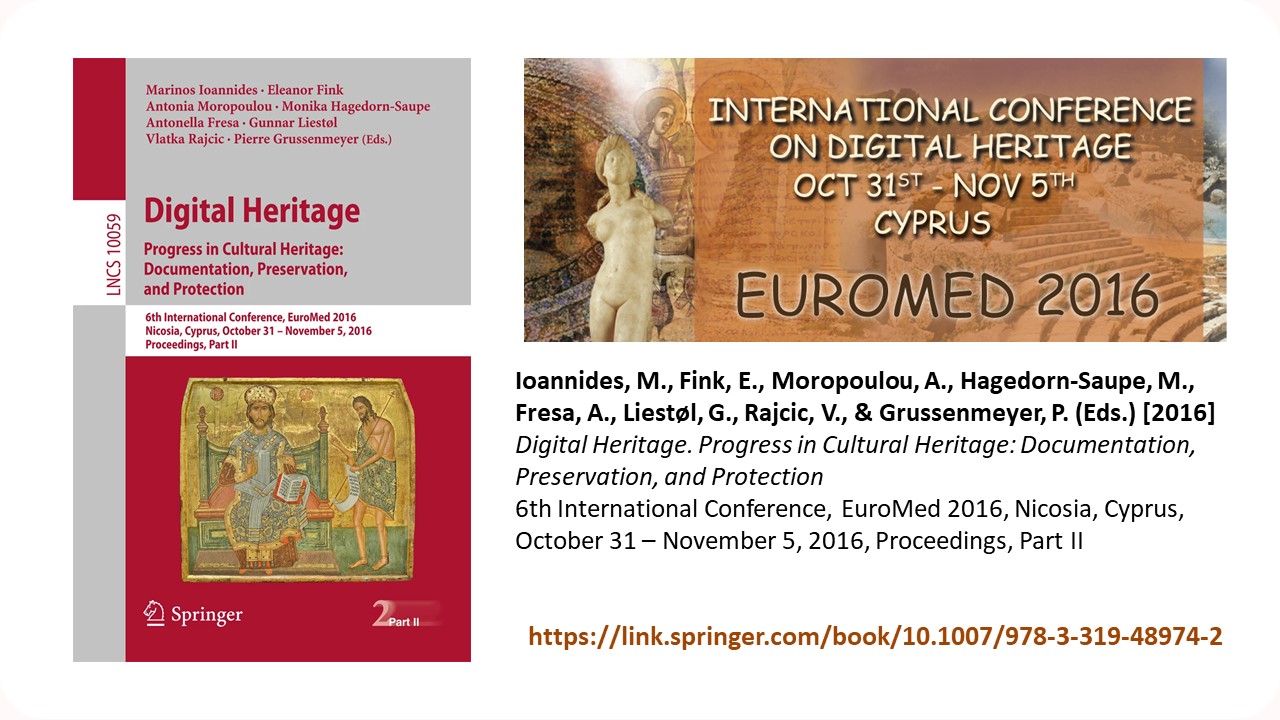
EuroMed 2016 brought together an influential international gathering of scientists, researchers, and cultural stakeholders at the Filoxenia International Conference Centre in Nicosia, Cyprus. Organised by the Digital Heritage Research Lab of the Cyprus University of Technology, the six-day event actively addressed the intersection of computer science, engineering, and historical preservation. Attendees engaged in technical sessions aligned with the goals of the European Union’s Horizon 2020 framework, focusing specifically on the global standardisation of Heritage Building Information Modelling (HBIM) and cloud-based 3D data acquisition. By bringing together experts from over 60 countries, the forum successfully promoted cross-border cooperation to safeguard endangered historical sites against environmental hazards and global conflicts.
The academic merit of the event was underscored by an exceptionally rigorous selection process, where a global scientific committee reviewed 502 submissions but ultimately accepted only 105 competitive papers. Beyond purely theoretical presentations, the conference successfully concluded with a major policy proposal to establish a Cultural Heritage Knowledge Exchange Centre under United Nations auspices, reinforcing practical data-sharing frameworks for the digital archiving of intangible global heritage.
Publications
- M. Ioannides, E. Fink, A. Moropoulou, M. Hagedorn-Saupe, A. Fresa, G. Liestøl, V. Rajcic, & P. Grussenmeyer (Eds), Digital Heritage. Progress in Cultural Heritage: Documentation, Preservation, and Protection 6th International Conference, EuroMed 2016, Nicosia, Cyprus, October 31 – November 5, 2016, Proceedings, Part I. Lecture Notes in Computer Science. Springer International Publishing. Available from https://doi.org/10.1007/978-3-319-48496-9
- M. Ioannides, E. Fink, A. Moropoulou, M. Hagedorn-Saupe, A. Fresa, G. Liestøl, V. Rajcic, & P. Grussenmeyer (Eds), Digital Heritage. Progress in Cultural Heritage: Documentation, Preservation, and Protection 6th International Conference, EuroMed 2016, Nicosia, Cyprus, October 31 – November 5, 2016, Proceedings, Part II. Lecture Notes in Computer Science. Springer International Publishing. Available from https://doi.org/10.1007/978-3-319-48974-2
EuroMed 2015
1st Pan-Hellenic Conference on the Preservation of Cultural Heritage
Conference website(opens in a new tab)EuroMed 2015 was the first sister conference (Pan-Hellenic Conference on Digital Cultural Heritage) dedicated to the cultural heritage of the Hellenic World. EuroMed 2015 successfully debuted from 24 to 26 September 2015 in the coastal city of Volos, Greece. Jointly organised by the Cyprus University of Technology, the Technological Educational Foundation of Piraeus, and the Greek non-governmental organisation Perrevia Network, the event established a historic, biennial national platform dedicated to Hellenic preservation. Attendees—comprising Greek and Cypriot scientists, researchers, and cultural institutions—convened at the University of Thessaly to review advanced strategies for archiving and safeguarding regional assets. The inaugural assembly effectively bridge local historical preservation efforts with the broader technical methodologies developed by the international EuroMed community.
The academic and collaborative sessions focused heavily on setting unified digital standards for regional museums, local archives, and cloud-based metadata repositories. Participants actively explored 3D digitisation techniques, the preservation of intangible folklore, and cross-border digital cultural arcs between Greece and Cyprus. Backed by influential institutional supporters including the Greek National Tourism Organisation, the Region of Thessaly, and both the Greek and Cypriot chapters of ICOMOS, the conference successfully formalised partnerships between state entities, universities, and research laboratories. The breakthrough panels and case studies presented over the three-day event laid the groundwork for future iterations, turning the Pan-Hellenic cycle into a premier scientific forum for the preservation of Hellenic cultural heritage.
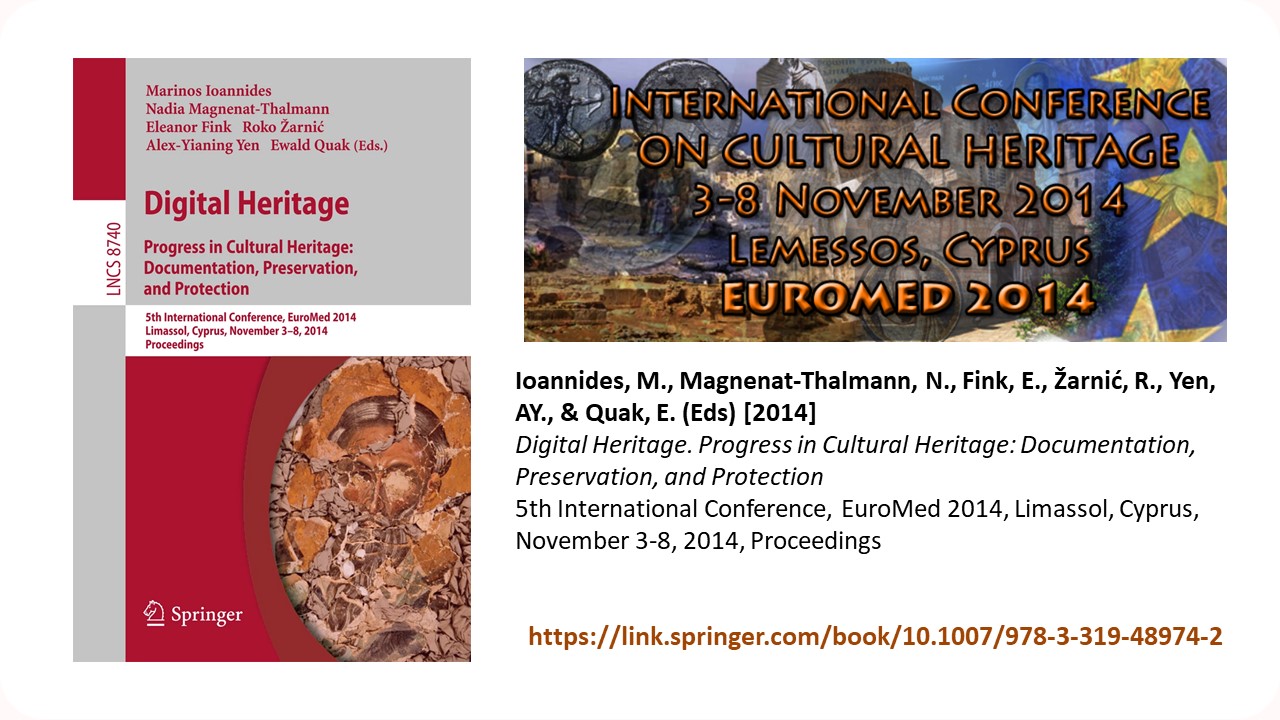
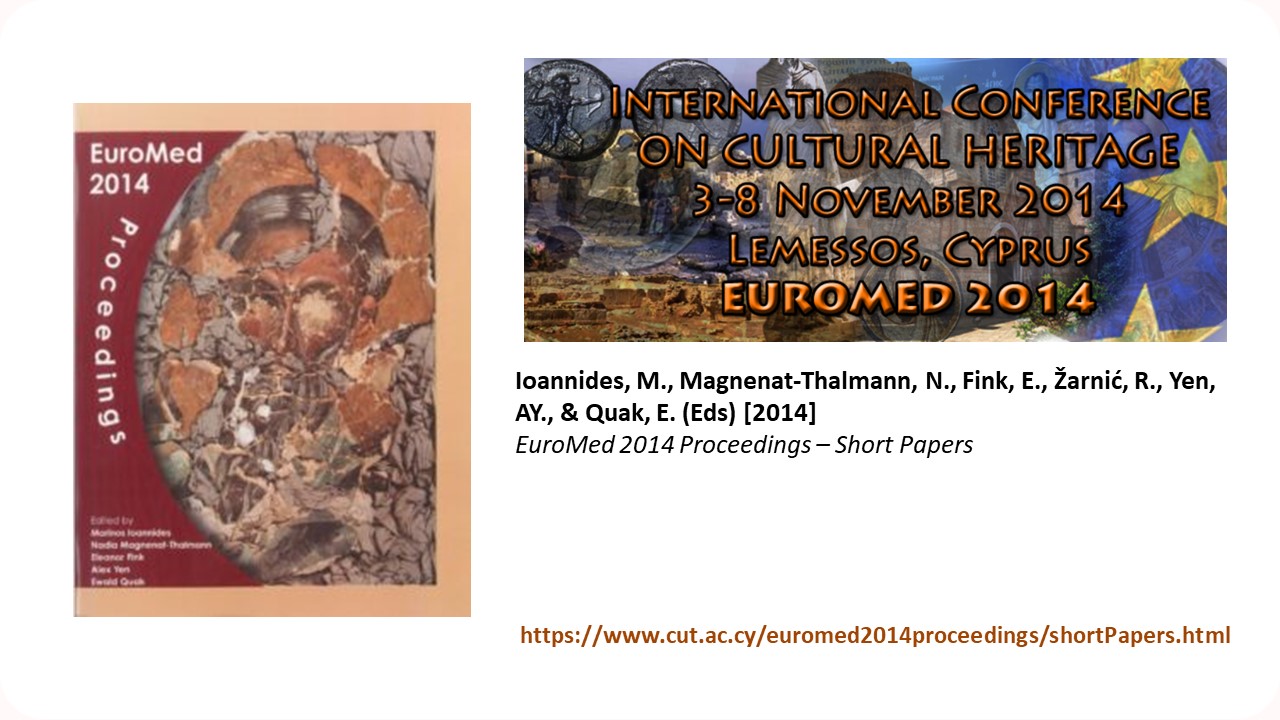
EuroMed 2014 successfully convened a prestigious international assembly of researchers, policymakers, and industry professionals in Limassol, Cyprus. Held under the high patronage of the President of the Republic of Cyprus, the six-day event addressed the urgent need for interdisciplinary solutions to protect, restore, and digitally document global cultural assets. Attendees participated in highly technical sessions that explored the deployment of terrestrial laser scanning, unmanned aerial vehicles (UAVs) for landscape archaeology, and immersive virtual reality environments for public exhibitions. By focusing heavily on protecting historical sites from environmental hazards and conflict, the conference successfully bridged the gap between advanced scientific engineering and cultural preservation.
The academic merit of the event was underscored by an exceptionally rigorous selection process, where a global committee reviewed 438 submissions but ultimately accepted only 84 full papers and 51 short papers. Beyond purely academic theory, the presentations successfully demonstrated practical applications for small-to-medium enterprises, establishing new international standards for cloud-based metadata storage, intellectual property rights, and the interactive web-archiving of intangible heritage.
Publication
- M. Ioannides, N. Magnenat-Thalmann, E. Fink, R. Žarnić, A.-Y. Yen, & E. Quak (Eds), Digital Heritage: Progress in Cultural Heritage. Documentation, Preservation, and Protection: 5th International Conference, EuroMed 2014, Limassol, Cyprus, November 3-8, 2014, Proceedings. Lecture Notes in Computer Science. Springer International Publishing. Available from https://doi.org/10.1007/978-3-319-13695-0
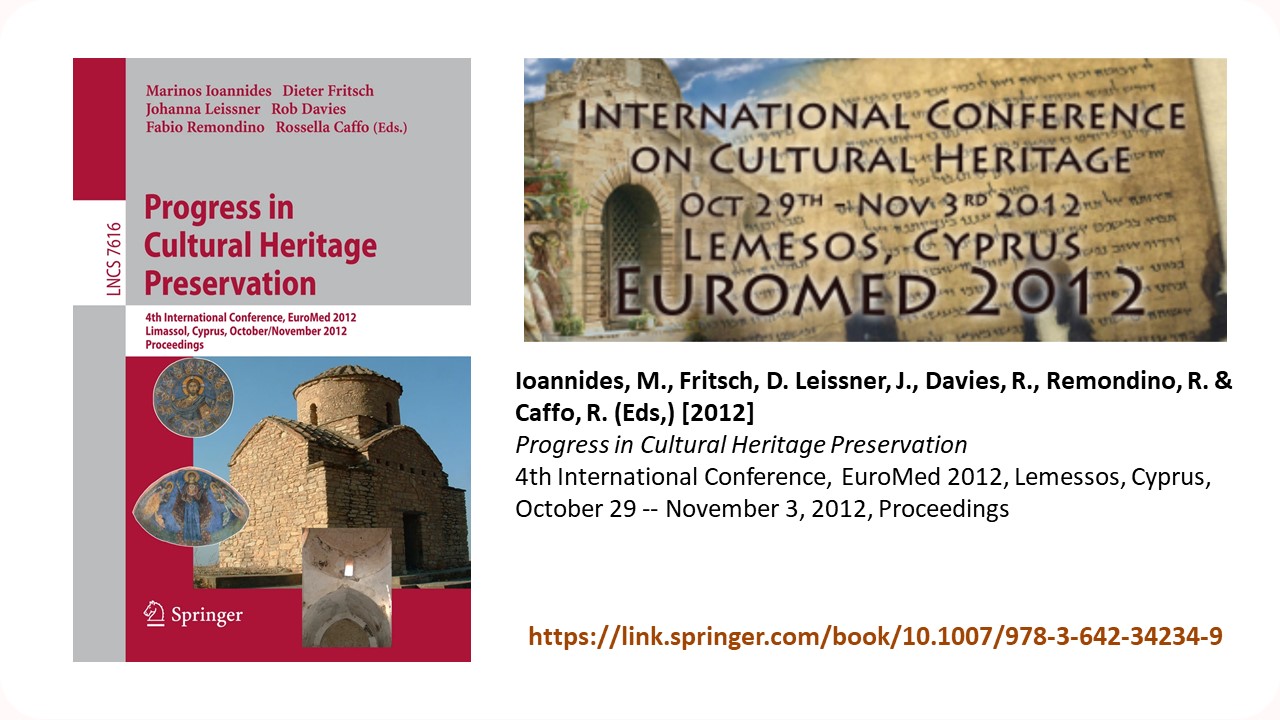
EuroMed 2012 successfully brought together a diverse group of global researchers, policymakers, and archivists in Limassol, Cyprus. Held under the high patronage of the European Commission, the event served as a vital academic forum that closely examined the intersection of advanced technology and historical preservation. Attendees participated in rigorous panels that explored high-resolution 3D data capture, geographic information system (GIS) mapping for archaeology, and the development of standardised metadata for digital archiving. The overall structure of the conference fostered active collaboration between small-to-medium enterprises and public institutions, driving meaningful conversations regarding sustainable heritage management.
The academic contributions of the event were highly substantive, culminating in a competitive selection process where only 95 full papers were accepted out of nearly 400 global submissions. These breakthrough studies, which detailed new methods in virtual reality for historical research and structural data management. By establishing unified digital documentation strategies and addressing complex policy topics like intellectual property rights for orphaned works, the conference left a lasting impact on how Europe safeguards its tangible and intangible cultural assets.
Publication
- M. Ioannides, D. Fritsch, J. Leissner, R. Davies, F. Remondino, & R. Caffo (Eds), Progress in Cultural Heritage Preservation 4th International Conference, EuroMed 2012, Lemessos, Cyprus, October 29 — November 3, 2012, Proceedings. Lecture Notes in Computer Science. Springer Berlin Heidelberg. Available from https://doi.org/10.1007/978-3-642-34234-9
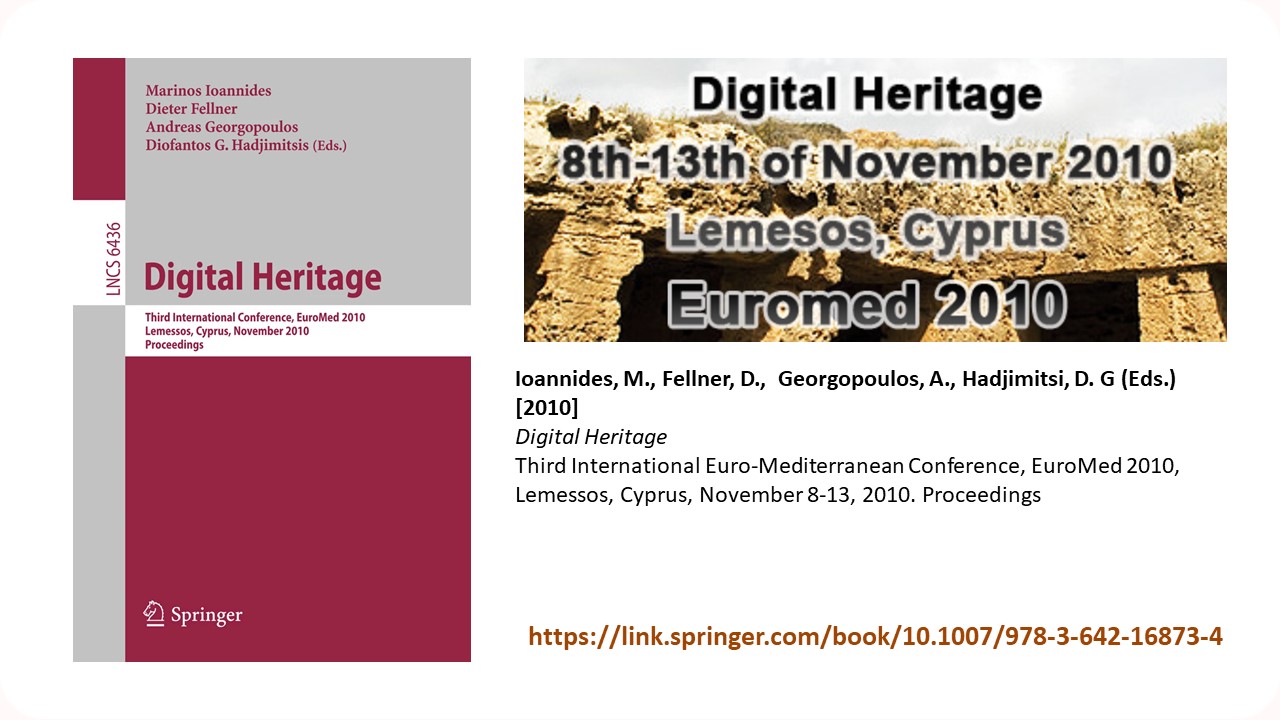
EuroMed 2010 was held from 8–13 November 2010 in Lemessos (Limassol), Cyprus. Dedicated entirely to digital heritage, the conference served as a flagship international platform where computer scientists, archaeologists, and cultural professionals collaborated to advance the documentation, preservation, and protection of vulnerable global history.
The event focused heavily on exploiting technological breakthroughs to archive and protect shared historical assets. Sponsored by UNESCO, the landmark conference successfully bridged the gap between engineering and the humanities, establishing rigorous international metadata criteria.
Publication
- M. Ioannides, D. Fellner, A. Georgopoulos, & D. G. Hadjimitsis (Eds), Digital Heritage. Third International Euro-Mediterranean Conference, EuroMed 2010, Lemessos, Cyprus, November 8-13, 2010. Proceedings. Lecture Notes in Computer Science. Springer Berlin Heidelberg. Available from https://doi.org/10.1007/978-3-642-16873-4
EuroMed at VSSM 2008
2nd International Conference on Digital Heritage
Conference website(opens in a new tab)VSMM 2008 took place from 20 to 25 October 2008 in Limassol, Cyprus. It combined three significant events, the 14th International Conference on Virtual Systems and Multimedia, the 38th ICOMOS/ISPRS CIPA International Workshop and the 2nd Euro-Med Conference on IT in Cultural Heritage under the banner of “Digital Heritage 2.0: Our Hi-tech-Story for the Future”.
The event focused on technology for documenting, preserving, and communicating vulnerable history. Sessions emphasised 3D reconstruction, computer graphics, immersive VR, and digital museum databases. The conference fostered collaboration between engineering and archaeology, setting international standards for electronic documentation alongside partners like UNESCO. It advanced tools for heritage conservation and established frameworks for digital preservation.
Publications
- Ioannides, M., Addison, A., Georgopoulos, A., & Kalisperis, L. (Eds.). (2008). Digital heritage: Proceedings of the 14th International Conference on Virtual Systems and Multimedia (Research Papers). Archaeolingua. Available from https://diglib.eg.org/handle/10.2312/14804
- Ioannides, M., Addison, A., Georgopoulos, A., & Kalisperis, L. (Eds.). (2008). Digital heritage: Proceedings of the 14th International Conference on Virtual Systems and Multimedia (Short Papers). Archaeolingua. Available from https://diglib.eg.org/handle/10.2312/14805
- Ioannides, M., Addison, A., Georgopoulos, A., & Kalisperis, L. (Eds.). (2008). Digital heritage: Proceedings of the 14th International Conference on Virtual Systems and Multimedia (Project Papers). Archaeolingua. Available from https://diglib.eg.org/handle/10.2312/14806
EuroMed at CIPA VAST 2006
1st International Conference on Digital Heritage
Conference website(opens in a new tab)CIPA VAST 2006 was a landmark joint international conference held from October 30 to November 4, 2006, in Nicosia, Cyprus. It merged the 37th CIPA Workshop, the 7th VAST (Virtual Reality, Archaeology, and Cultural Heritage) Symposium, the 4th EUROGRAPHICS Workshop on Graphics and Cultural Heritage and the 1st Euro-Med Conference on IT in Cultural Heritage to focus on 3D computer graphics and e-documentation in cultural heritage.
The event united leading experts in technology and archaeology to establish new digital documentation standards. It was notable for hosting the foundational debut of the VAST Challenge (a premier competition in visual analytics) and serving as the forum where the influential London Charter for computer-based visualisation of cultural heritage was initially introduced.
Publication
- Arnold, D., Niccolucci, F., Ioannides, M., & Mania, K. (Eds.). (2006). VAST’06: Proceedings of the 7th International Conference on Virtual Reality, Archaeology and Intelligent Cultural Heritage. Eurographics Association. Available from https://dl.acm.org/doi/proceedings/10.5555/2384301